April 29, 2026
Have I Grown Cynical, or Am I Just Being Realistic?
Wondering if I've grown jaded and cynical as I get older, or am I simply being honest about how things are because I absorbed the lessons that experience provided?.
April 29, 2026
Have I Grown Cynical, or Am I Just Being Realistic?
Wondering if I've grown jaded and cynical as I get older, or am I simply being honest about how things are because I absorbed the lessons that experience provided?.
5 min read
As I’ve gotten older I find that fewer things capture my attention. I literally and figuratively shrug my shoulder a lot these days; when people try to engage me in conversations about current events or when I see the bombastic titles of stories, videos and podcasts. I wonder if I’ve become jaded and cynical or is it simply that I’ve seen this movie before and I know how it ends?
A favorite podcast of mine is hosted by an older experienced business and thought leader and a younger (late 20’s) media and business “analyst”. The younger host is quite an accomplished interviewer and he hosts his own segments where he is developing his own thought leadership skills. He’s becoming a business, financial and political pundit in his own right.
I enjoy this host as he’s a refreshing change of pace when it comes to punditry. He’s mostly positive and a tad idealistic, and yet he combines this with a realistic belief that money is to be made slow and steadily and that his power at his age is his ability to increase his income over time. Meme stocks, gambling and crypto schemes don’t appeal to him. I can relate to this line of thinking.
I’m struck by how much of his show has been focused on the US / Iran war since the war began on February 28, 2026. Most of the shows essentially revolve around his unrelenting disbelief that after an initial downward response, the stock market has come to ignore the daily ups and downs of the war and just returned to its previous grind higher. Then add in the fact that the economy hasn’t broken to any great degree and he seems a tad incredulous that more hasn’t gone wrong since the outbreak of the war.
For my part, I don’t like that fact that we initiated and are engaged in this war. However, the reality is that my ability to do anything about it is non-existent. The opportunity for any typical American citizen to have done anything about this war was at the ballot box in 2024 and my candidate lost; the country made a different choice. I have no option but to accept this.
I have also lived through numerous military conflicts throughout the world that I thought would matter when, in fact, they didn’t. At least not to the degree that I thought they should have. Their impact to our way of life was minimal. The world just kept on spinning and doing its thing.
At this point, while the war makes for outstanding content for many of today’s comedians, I don’t follow the day to day happenings of the war. While the day to day activities of the war are beyond brutal for those participating and for those on the receiving end of the strikes, to be honest, it doesn’t personally impact me all that much…yet. This may change, but that is the truth right now.
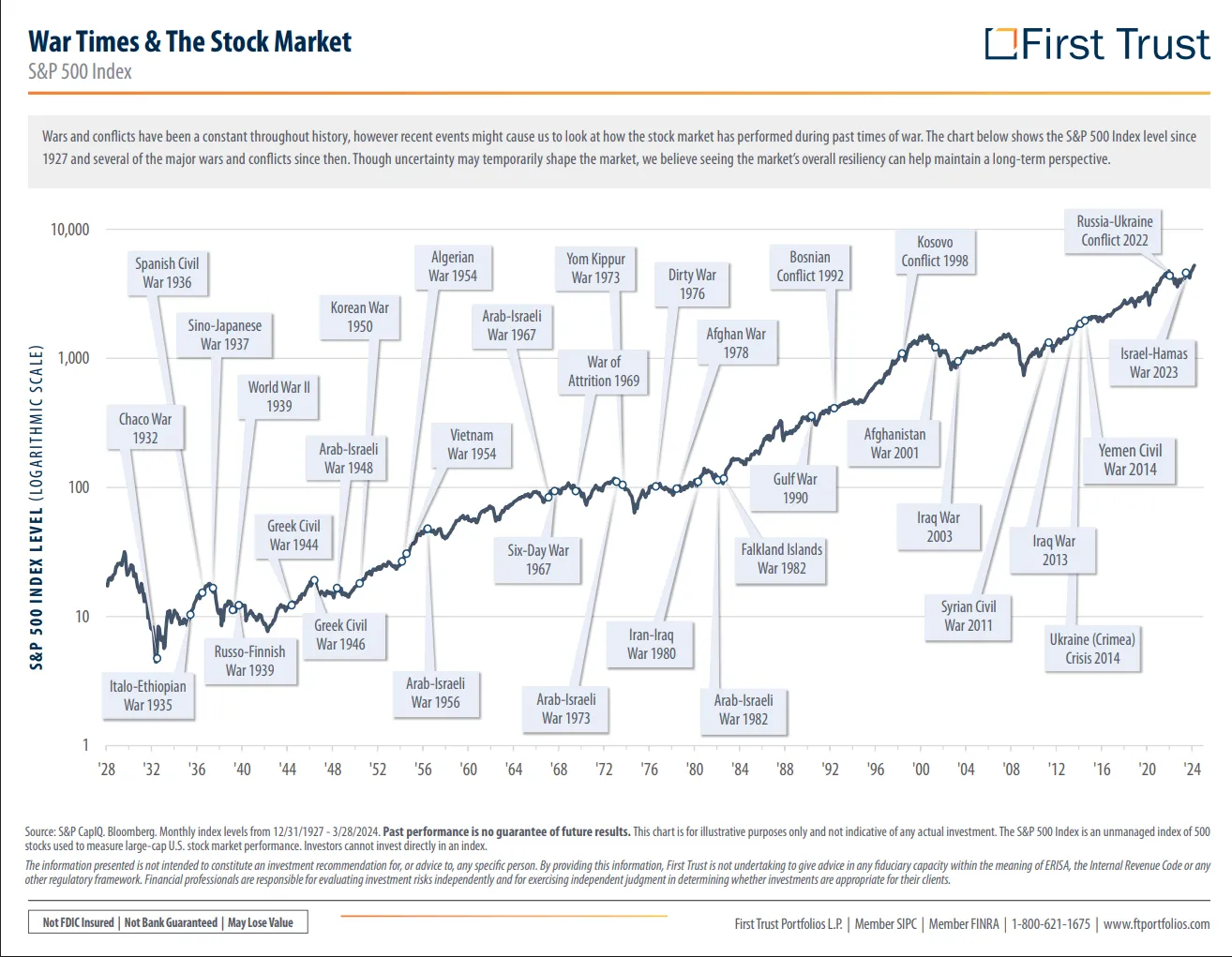
And it’s not affecting much of our businesses and personal investments, either. While it is reasonable to think that a military conflict might do significant damage to your investment portfolio, the reality is quite the opposite. Most military conflicts since the mid-1950’s don’t have an visible impact on the performance of the S&P 500.
A chart provided by First Trust Portfolios bears this out. If you focus on events post 1950, the Yom Kippur War of 1973 is the only one that one would really say preceded a significant downturn in the market. And this downturn was more likely due to the oil crisis and other economic issues in America than the war itself. Otherwise, if you stayed invested the wars and conflicts were relatively minor blips on the eventual grind higher.
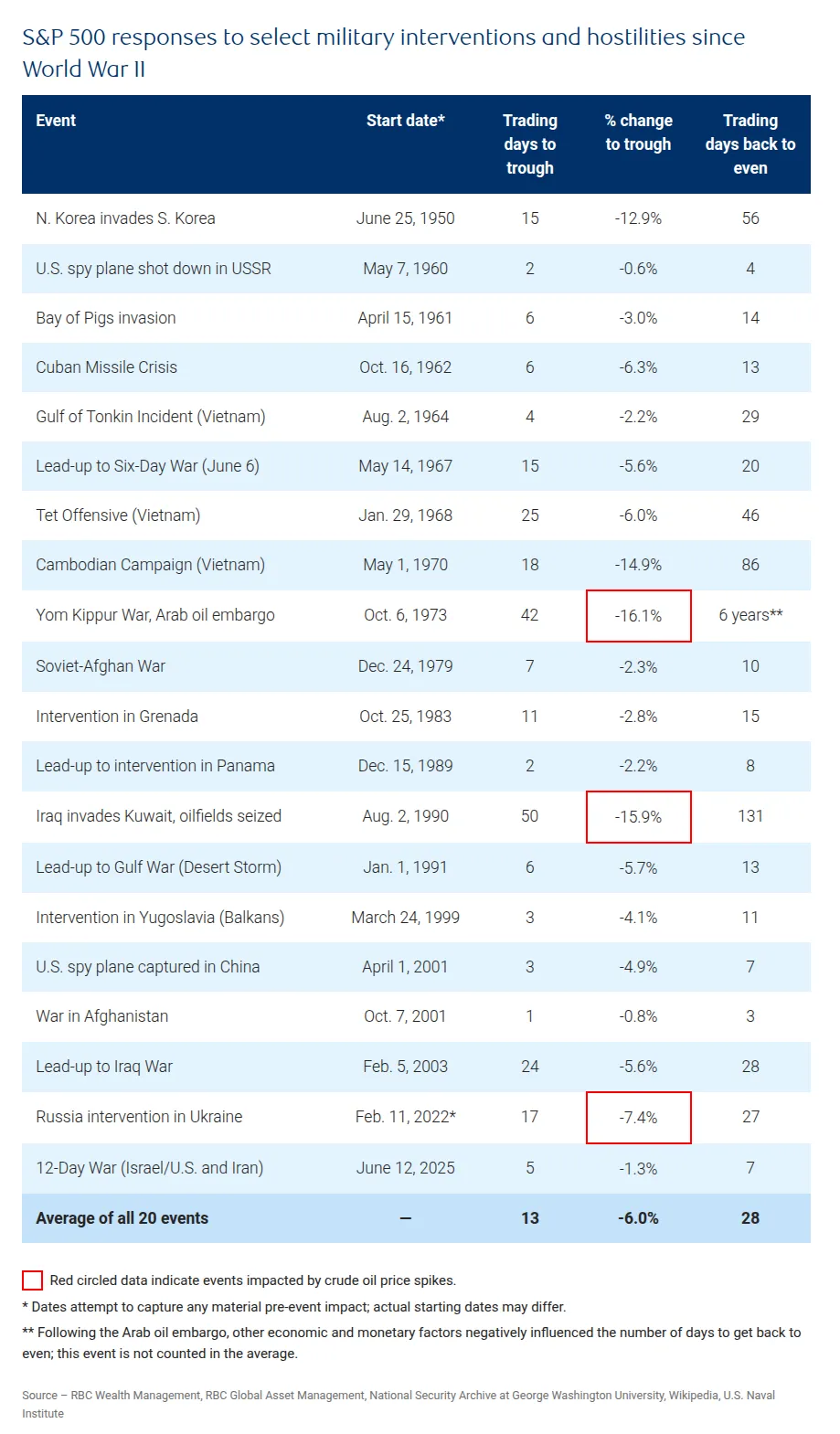
This point is amplified in this next chart, provided by RBC Wealth Management. Their chart shows the number of trading days from the start of the conflict to the bottom of its trough, the percentage loss to the bottom of the trough and then the number of trading days to get back to even, erasing any financial impact of the war. Each conflict is different, but it is shocking that the average number days to reach the bottom is only 13 and that it only takes us four weeks, or 28 days, to get back to even from the bottom. Together, both the trough and climb back higher only average 41 days. Not even six weeks.
So, have I become jaded and cynical? Or, am I just being realistic and using my experiences and history to guide me to a calmer and more positive personal experience? It’s probably a little of both, but by focusing on what history teaches us I am able to maintain a positive outlook, keep my focus on my local community and things that truly matter in my life.